The Amazing World of Pterodactyls


Ever wondered what it was like to soar through the sky alongside ancient flying creatures? Today, we’re going to explore the fascinating world of the Pterosaurs.
What is a Pterodactyl?
Unfortunately, there is no such thing as a Pterodactyl!!! The animals that you know as Pterodactyls, are actually a group of flying reptiles known as pterosaurs. These animals first begin to appear during the Triassic Period, and despite living alongside the dinosaurs, were not dinosaurs themselves! Despite this they do share a common ancestor, as pterosaurs, just like the dinosaurs and crocodiles evolved from early archosaurs.
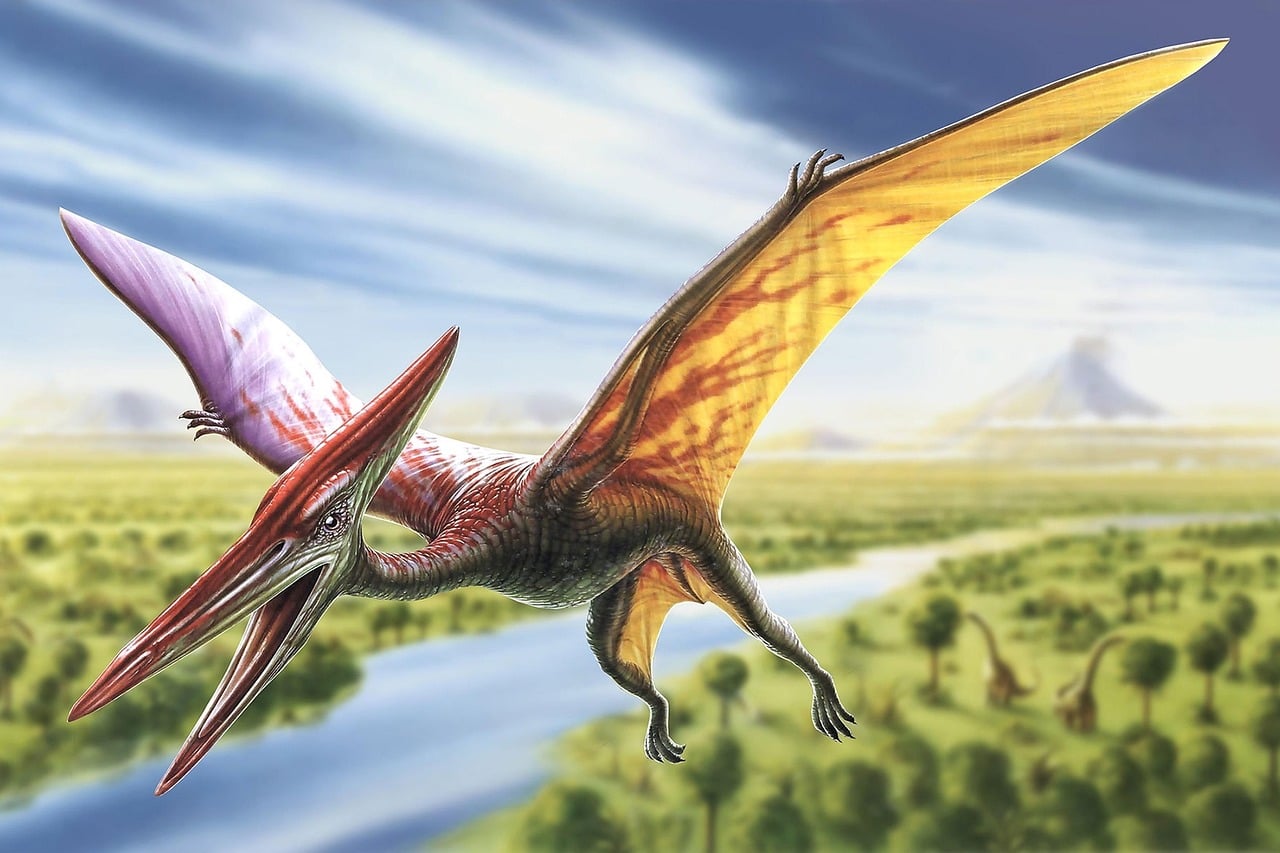
Pterosaurs had wings made of a thin membrane of skin, muscle, and other tissues that stretched from their elongated fourth finger to their bodies. These wings could span from a few feet to over 30 feet wide, making them excellent gliders. They had lightweight, hollow bones and large, sharp beaks. Some species even had crests on their heads, which might have been used for display or steering while flying.
What Did They Eat?
Pterodactyls were mostly carnivorous, meaning they ate meat. Their diet included fish, insects, and even small animals. They used their sharp beaks to snatch up prey from the water or land. Imagine them as the ancient sky’s expert fishermen!
How Did They Fly?
These incredible creatures were masters of the sky. They used their wings to glide gracefully over long distances. Pterosaurs likely took off from cliffs or trees, catching the wind to help them get airborne. Once in the air, they could travel long distances with minimal effort, thanks to their efficient gliding abilities. They were the first group of vertebrates to evolve powered flight!
Fun Facts
- Not All Pterosaurs Were Pterodactyls: While “Pterodactyl” is often used to describe all pterosaurs, it actually refers to a specific genus within the larger group of flying reptiles.
- Eggs and Babies: Pterosaurs laid eggs! Baby pterosaurs, known as hatchlings, had to grow and learn to fly just like birds do today.
- Size: Pterosaurs varied dramatically in size, with smaller species such as Nimocolopterus having wingspans as low as just 25 centimeters, while species such as Quetzalcoatlus could reaching wingspans of up to 13 metres, roughly equivalent to a fighter jet in size!
Why Study Pterosaurs?
Learning about Pterosaurs helps scientists understand how animals adapted to their environments millions of years ago. By studying fossils, we can piece together the puzzle of Earth’s history and learn about the incredible diversity of life that once existed.
So next time you see a bird soaring high in the sky, think about the amazing Pterosaurs that ruled the skies millions of years ago. 🦅
Don’t forget to check out the Pterosaurs on your next visit to National Dinosaur Museum.
References
- Pterodactyls – Natural History Museum
- Pterosaur – National Geographic
- Pterosaurs – Smithsonian National Museum of Natural History
- Flying Reptiles – BBC Earth